LASIK · 10 Dec 2025 · 9 min read
Laser Eye Treatment: Options, Costs and What to Expect
How laser vision correction works, who it may suit, and what our care team walks you through from evaluation to recovery — without invented promises.
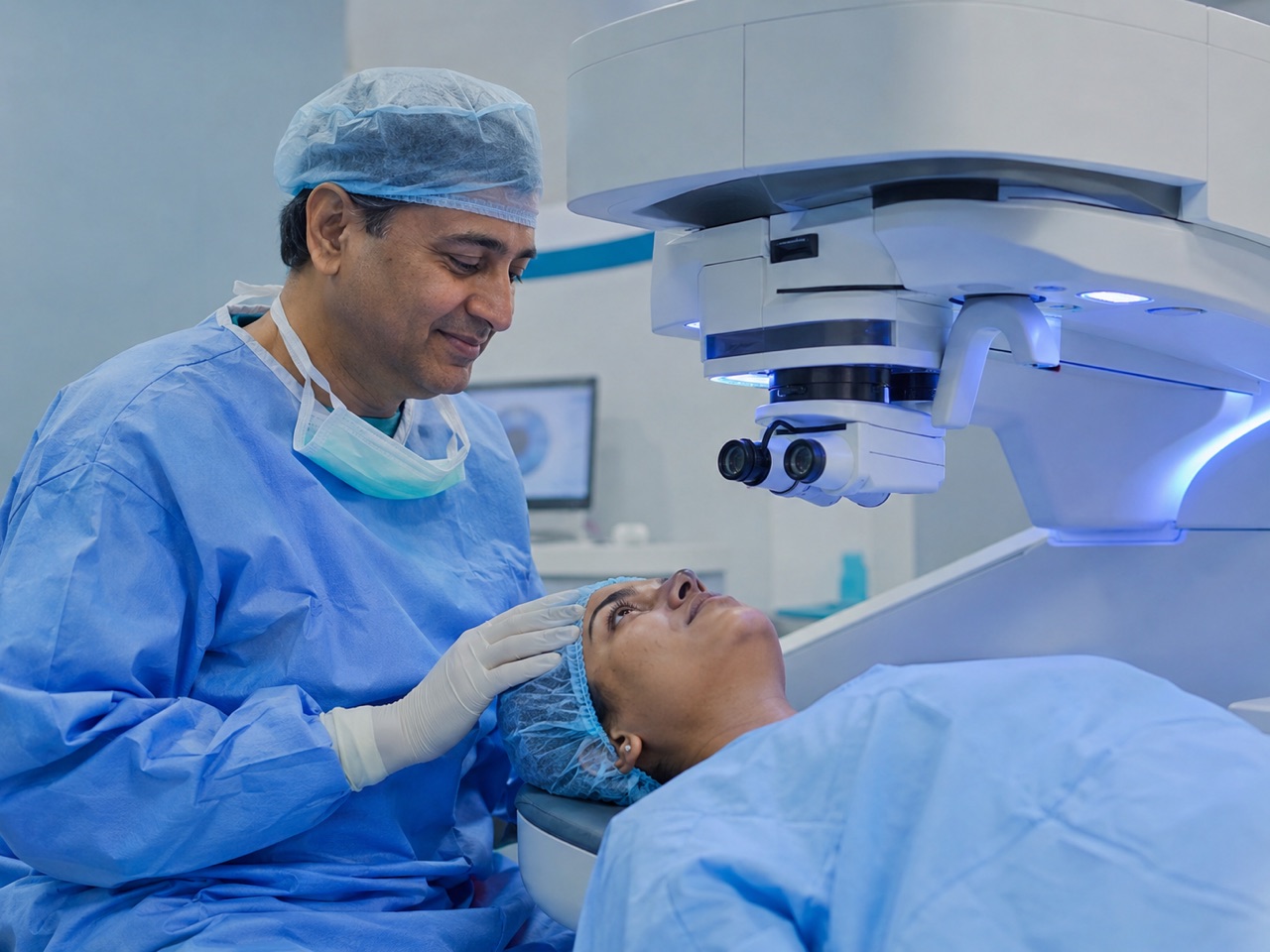
“Laser eye treatment” is a family of procedures that reshape how light enters the eye so you depend less on glasses or contacts. ReliveCure evaluates LASIK and related refractive options with senior surgeons in Gurugram, Hyderabad, Pune, Mumbai, and the other metros we already serve — and we are equally comfortable saying when laser is not the right answer. The first visit is a LASIK screening, not a theatre date.
How Laser Vision Correction Works
In LASIK-style care, a thin corneal flap (or a small keyhole access in some flapless techniques) lets the laser reshape underlying tissue. The goal is a more accurate focus for short-sight, long-sight and/or astigmatism within carefully defined ranges. Success depends on precise measurement, stable refraction and healthy ocular surface — not on marketing labels.
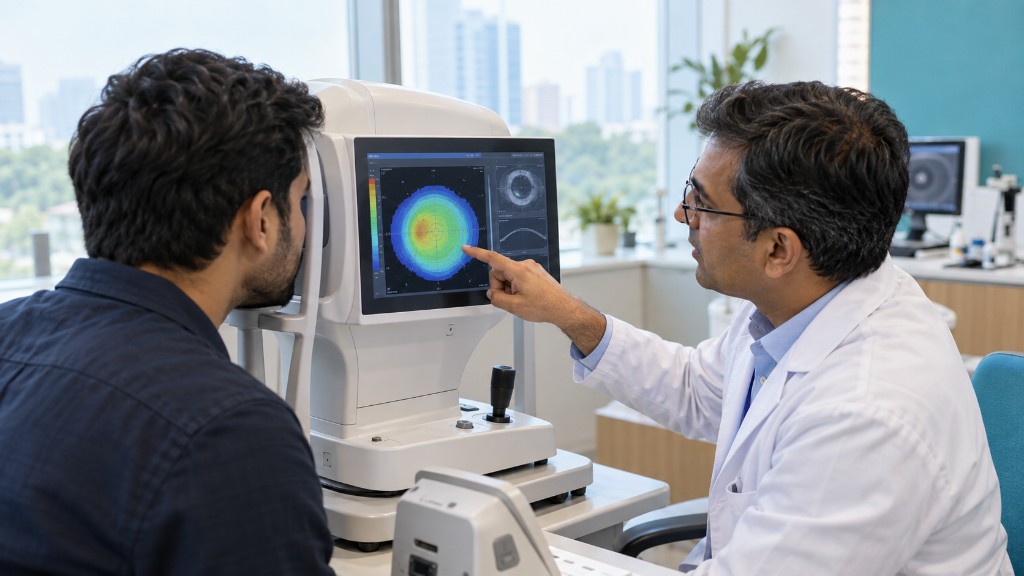
Your journey with us always starts with a free consultation and detailed scans. Only then do we discuss technology, recovery and an exact written quote.
Main Options Patients Ask Us About
Standard and blade-free LASIK
Blade-free (femtosecond) flap creation is widely preferred today for predictability. Topography-guided and other customised ablations may be suggested when your corneal map shows irregularities that a standard pattern would not address as well.
Flapless / keyhole approaches
Some patients are candidates for procedures that avoid a large flap. Suitability is anatomy-driven; we explain trade-offs honestly at evaluation rather than pushing a single brand name.
When laser is not ideal
Very high prescriptions, thin corneas, certain corneal diseases, uncontrolled dry eye or unrealistic expectations can push us toward ICL (implantable collamer lens) or simply continuing with updated glasses/contacts. A free consult stays free either way.
Who May Be Considered
Typical discussion points include age (adult with a stable prescription), healthy cornea, and understanding that enhancement or residual refractive error can still occur. Pregnancy, active eye infection and some autoimmune conditions often mean we postpone or decline laser until it is safer.
We do not invent success percentages in this article. Your surgeon will discuss published evidence and your risk profile in person.
Indicative Costs
For both eyes, ReliveCure LASIK packages commonly fall between about ₹15,000 and ₹1,40,000 depending on technology tier. Figures are indicative — confirmed at your free consultation, and they usually include standard pre-op scans in the package discussion. No-cost EMI is often available. Insurance rarely covers elective refractive surgery; we can review corporate policy wording if you share it.
ICL, when recommended instead, sits in a different band (typically ₹75,000–₹1,25,000 per eye in our published ranges) because a custom lens is ordered for your eye.
What to Expect: Evaluation to Recovery
Before
Stop contact lenses as instructed, arrive makeup-free for scans, and bring prior prescriptions. Ask every question — suitability, downtime, night-vision symptoms, enhancement policy.
Surgery day
The laser portion itself is brief. You will need a companion to take you home. Rest, prescribed drops and sunglasses matter more than heroic “back to gym tomorrow” plans.
After
Many people notice clearer unaided vision quickly, with vision continuing to settle over days to weeks. Dryness and halos can occur temporarily. Attend every follow-up; call us if pain, sudden vision drop or redness worries you.
Choosing With Our Care Team
We are one care team: counselling, theatre coordination and aftercare sit together so you are not left decoding jargon alone. The first visit still belongs to the map — if the cornea is a cone, not a LASIK cornea, read keratoconus treatment next.
Myths We Hear Every Week
“Higher wattage means better vision.” Marketing names change faster than evidence. What matters is whether your cornea and prescription fit a published treatment envelope, and whether the centre can measure and follow you properly.
“Everyone gets 6/6 forever.” Many patients achieve strong unaided distance vision, but healing varies, enhancements sometimes occur, and age-related near vision still arrives later. We describe likely ranges, not guarantees.
“If it is cheap it must be unsafe; if it is costly it must be premium.” Price tracks technology tier and facility inclusions more than moral virtue. Compare written inclusions, not Instagram reels.
Life After Laser: Screens, Sport and Travel
Desk work usually returns quickly with the 20-20-20 habit and lubricants. Gym weight training and swimming wait for clearance. Contact sports that risk eye trauma need a longer conversation — some patients choose ICL or stay with spectacles for that reason alone.
Air travel the day after is often discouraged until the first review. If work travel is non-negotiable, tell us at planning so reviews land in the right city.
How ReliveCure Frames the Decision
We start from clinic first-person care: our surgeons, our centres, one care team. You should feel guided, not sold. If laser is suitable, we explain the option in plain language. If not, we protect your cornea and your wallet by saying no — and still help you see clearly another way.
Book a free consultation when you want measurements that belong to you, not averages from a stranger’s blog.