Cornea · 19 Sept 2026 · 12 min read
Corneal Transplant: Scar, Ulcer and Dystrophy — Not a Package
A white patch, a cornea that will not heal, or a family fog that hides the iris. How PK, DALK and DMEK decisions work — ReliveCure maps first and books the consult.
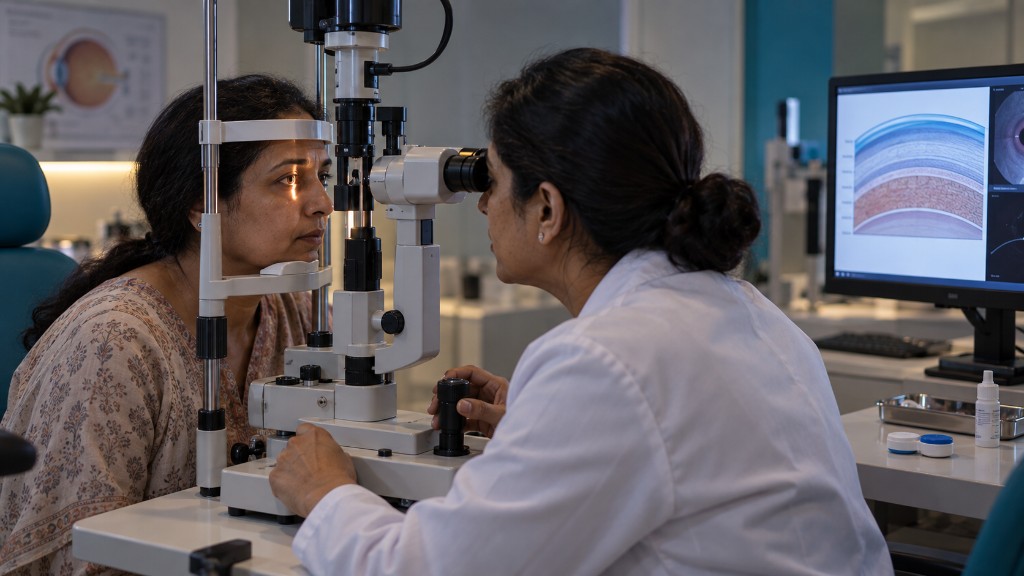
A white patch after an infection, a cornea that will not clear, or a family “fog” that slowly hides the iris is not a glasses update. Corneal transplant is one tool among several — and it is never the first sentence of a good consult. This page covers three searches that belong together: scarring after infection or trauma, a non-healing ulcer, and advanced corneal dystrophies.
ReliveCure evaluates, writes the plan, and when tissue replacement is the honest next step, matches you to a senior cornea surgeon at an accredited centre in Gurugram, Hyderabad, Pune or Mumbai. Timing depends on the eye bank. We will not invent a date.
What a corneal transplant actually replaces
The cornea is the clear front window. When it is scarred, swollen, or genetically irregular enough that glasses and specialist lenses cannot give useful vision — or when the surface will not heal — a surgeon may replace part or all of those layers with donor tissue.
Names you will hear:
| Name | What is replaced | Typical story |
|---|---|---|
| PK | Full thickness | Large scars, failed grafts, some advanced disease |
| DALK | Front layers; inner pump kept | Scars or keratoconus when the back layer is healthy |
| DSEK / DMEK | Inner pump layer | Swelling from endothelial failure (often Fuchs’) |
The acronym is not a menu you pick online. Tissue comes from an eye bank. Supply is constrained.
If the problem is a cone rather than a scar, start with keratoconus treatment — transplant is the late fork of that disease, not the first.
Scarring and opacity after infection or injury
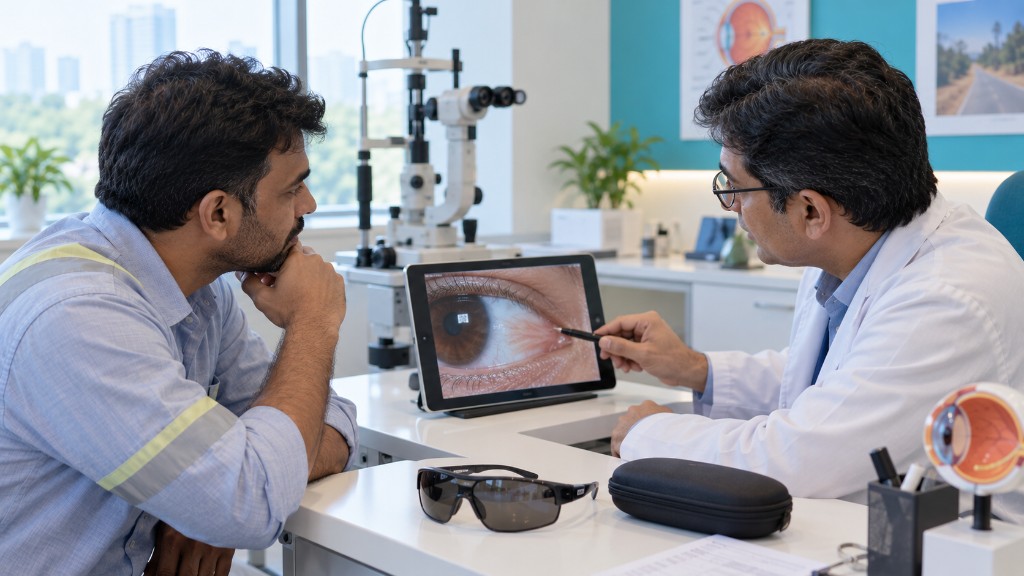
Healed keratitis, a chemical injury, or old trauma can leave a scar in the visual axis. Some scars sit off-centre and bother you less than they look. Some sit dead-centre and wreck contrast.
A 41-year-old logistics manager we saw had a childhood infection scar and had been quoted LASIK. Laser on a scarred, irregular cornea is often the wrong tool.
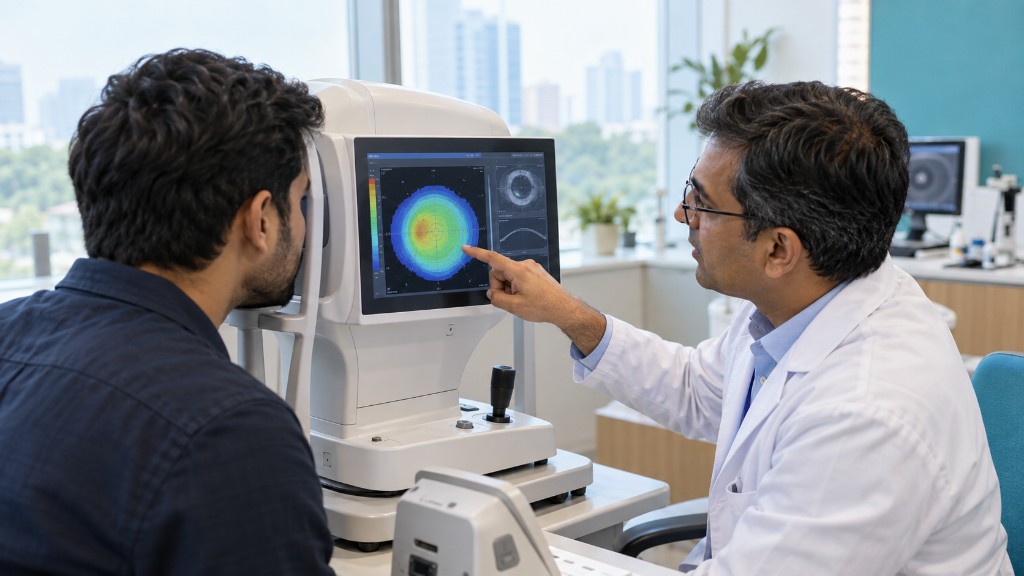
The honest fork is: live with the scar and a rigid lens, consider a partial transplant, or, if the whole cornea has failed, a fuller procedure. ReliveCure puts that on paper after the map.
Non-healing corneal ulcer and therapeutic keratoplasty
An ulcer that does not close on medicines is an emergency-adjacent problem: pain, light sensitivity, a white spot, reduced vision. Therapeutic keratoplasty is surgery to remove infected or melted tissue and restore a closed surface — sometimes to save the eye, not to gift 6/6. This is not elective packaging.
If that is happening now, call +91 96500 23161 the same day. Do not wait for this article’s FAQ to finish. After the acute phase, optical transplant (vision as the goal) may be a later, separate conversation.
Corneal dystrophies that reach surgery
Dystrophies are inherited patterns of deposits or layer failure. Fuchs’ endothelial dystrophy is the one families often recognise as morning blur that “clears by lunch”. Many never need an operation. Advanced swelling, painful blisters, or deposits in the visual axis may lead toward DMEK or DSEK — inner-layer procedures with a different recovery than a full PK.
Rare dystrophies are referral-driven. A second opinion before listing for tissue is reasonable.
If the cornea is clear and the problem is a high regular glasses number, ICL may be the fork — after the map says the shape is regular. For elective laser context, the laser eye treatment overview stays separate.
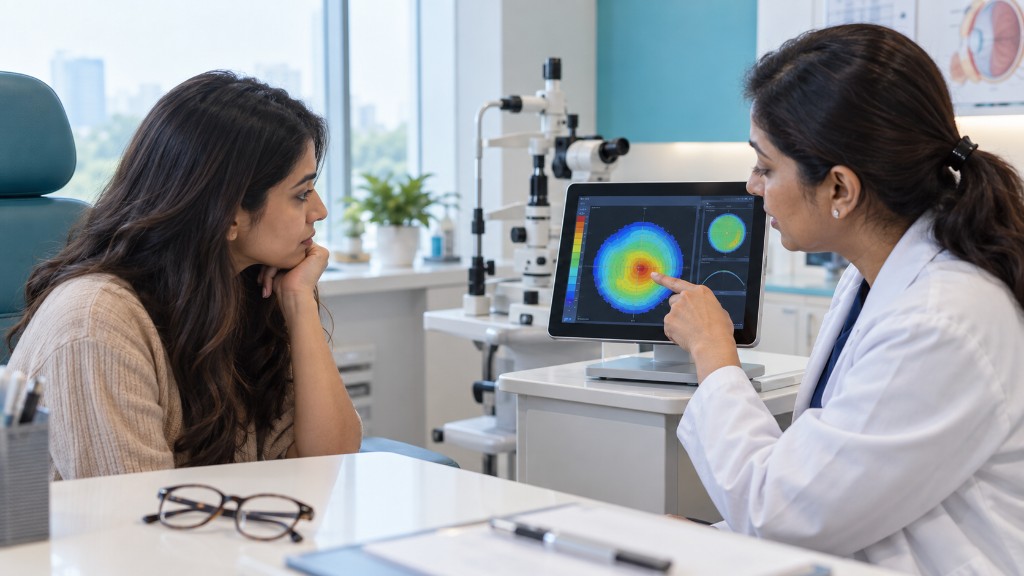
What a cornea evaluation should include
- Slit-lamp photographs you can see
- Thickness and, when relevant, endothelial counts
- Whether a specialist contact lens still has a role
- Infection history and current medicines
You should hear which layers failed, which procedure names are in or out, and that rejection, astigmatism after PK, and a long steroid taper are real.
Bank se tissue aata hai — donor tissue is not a warehouse SKU.
How ReliveCure sits here
You book with ReliveCure in Gurugram, Hyderabad, Pune, Mumbai, or another metro we already serve. We write the layer map. When a transplant is the honest next step, we match you to a senior cornea surgeon at an accredited centre. Cost, eye-bank timing, and follow-up load are discussed before anyone calls it booked. No guaranteed clarity.
If the lens, not the window, is cloudy, that is cataract surgery — a different tissue, a different clock.
Myths
“Every cloudy cornea needs a transplant.” Many scars and early dystrophies are managed with medicines, lenses, or watching.
“DMEK and PK are the same operation with different stickers.” Different layers, different recovery, different risk profile.
“They can schedule donor tissue like a consumer delivery.” They cannot.