Retina · 24 Sept 2026 · 10 min read
Papilledema Symptoms: Both Discs Swollen, Find the Pressure — Don’t Wait
Papilledema is swelling of both optic discs from raised pressure around the brain. It is an urgency to find the cause, not a tumour advert. ReliveCure examines you the same day when this is the picture.
Papilledema is swelling of both optic discs because the pressure around the brain is high. It is a finding, not a diagnosis of cancer. The job is to confirm the discs, protect the field, and find the cause the same day — including idiopathic intracranial hypertension (IIH) in young women, and other causes that need imaging.
We will not use this URL to sell fear. We will not tell you from a blog that you have a tumour. If both discs are swollen, headaches are new, or vision is dipping in blackouts, call +91 96500 23161 and come in today. ReliveCure evaluates in Gurugram, Hyderabad, Pune or Mumbai.
Both discs, not one angry nerve
Optic neuritis is typically one eye, pain on movement, a quiet-looking eye. Papilledema is both discs, often with headache, a whooshing in the ears, brief greying-out of vision (especially when you stand), or a field that is nibbled at the edges.
One swollen disc can be other things (including a crowded disc you were born with). The word papilledema is reserved for raised intracranial pressure until that is sorted. Mixing the two delays the right scan.
A third-nerve palsy with a dilated pupil is a different emergency again — possible aneurysm. That is not a papilledema booking. Go to emergency care.
Symptoms people actually search
- Headache that is worse in the morning or lying down
- Transient visual obscurations — seconds of grey, both eyes or either
- Double vision from a sixth-nerve stretch
- Nausea
- A routine glasses visit where someone said “your nerves look swollen”
The eye can still read 6/6 while the disc is swollen. Acuity is a late passenger. Fields and disc photos matter earlier. That is why “I can still see” is not reassurance.
Glaucoma also lives at the nerve, but it is a cup and a field from eye pressure, not papilledema. Do not treat this with glaucoma drops because a blog mixed the words.
A curtain of floaters is retinal detachment, not papilledema.
What happens at the visit
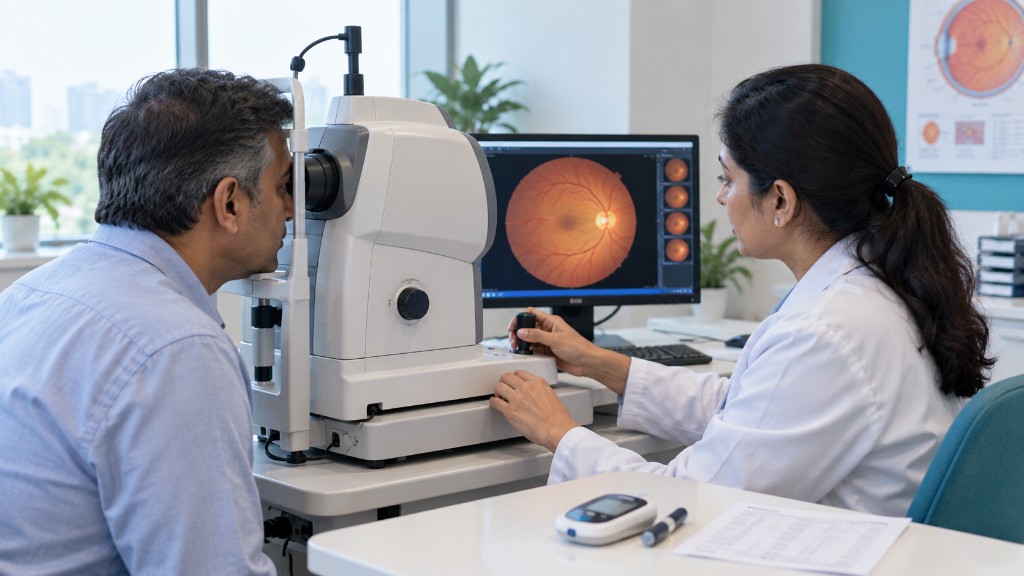
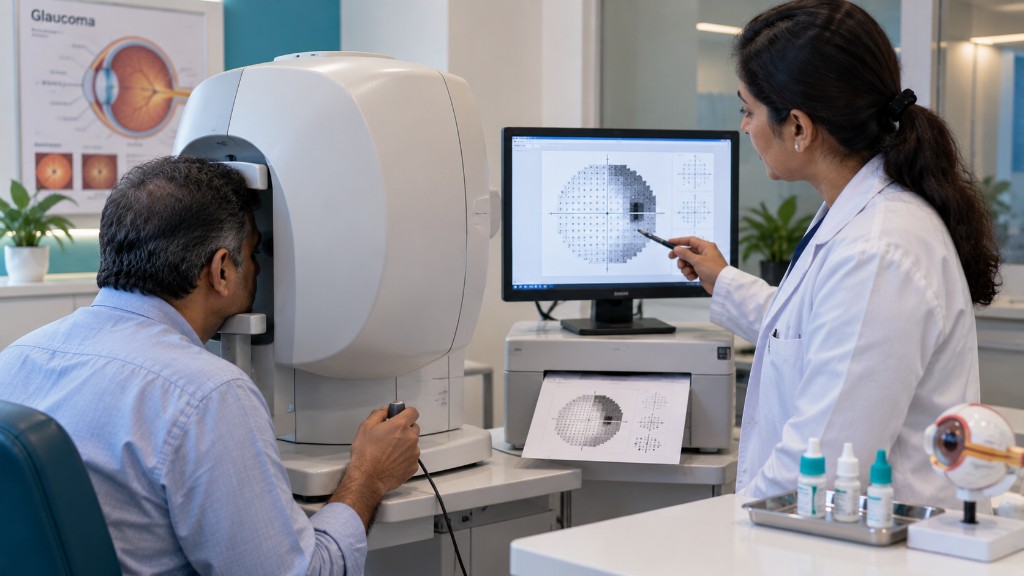
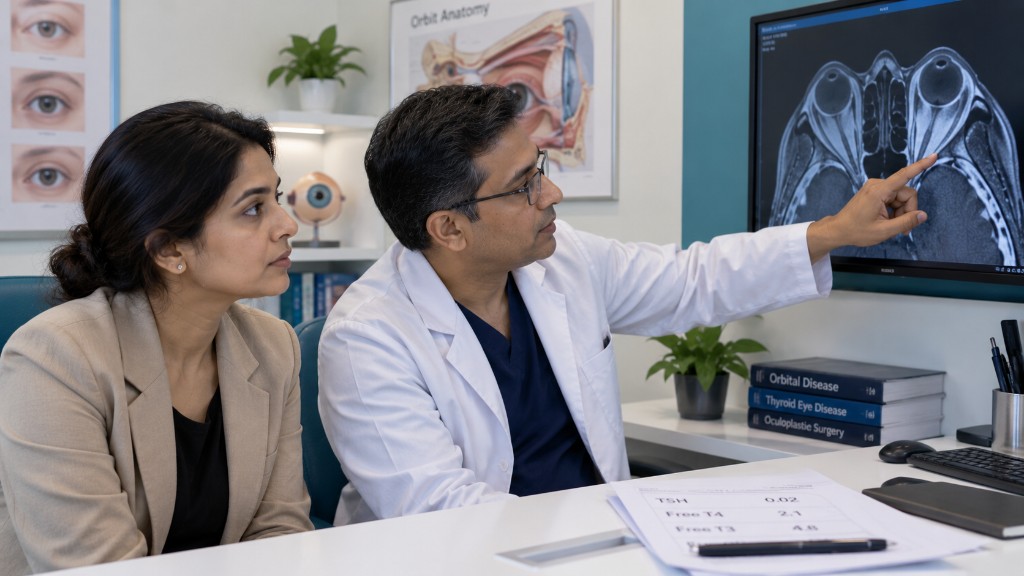
Expect dilation, disc documentation, fields, blood pressure, and a plan for imaging — MRI (and often MRV) as the next honest test, sometimes a lumbar puncture to measure CSF pressure after a mass has been thought about, not as a shortcut.
India private-market bands (not ReliveCure quotes):
| Item | Range | Typical cover |
|---|---|---|
| Neuro-ophthalmic assessment | ₹2,000–6,000 | OPD — usually not reimbursed |
| MRI brain and orbit | ₹6,000–20,000 | More often paid if admitted; OPD MRI often not |
| Lumbar puncture / CSF pressure | ₹8,000–25,000 | Usually when admitted |
| Optic nerve sheath fenestration | ₹90,000–2,00,000 | Sight-saving when indicated — not a package we sell from this article |
Cover follows the same insurance hub logic: OPD often self-pay; inpatient workup more often on the file. Usually / typically. Exact after we see you.
IIH (young woman, raised BMI, typical fields) is one cause, not the only cause. Treatment of IIH is weight, medicines, sometimes a procedure — decided after the pressure story is real, not after a Google image.
Sheath fenestration is a last-line, sight-saving option when fields are dying despite medical care. It is not a CTA on this page. If it becomes the honest next step, that is a separate, documented plan.
Call today
Both discs swollen. Visual blackouts. Field shrinking. New double vision with headache. Vomiting with a swollen-disc note.
Do not wait for a “free evaluation next Tuesday” if that is the picture. The evaluation is free. The delay is not. +91 96500 23161.
Where ReliveCure fits
We look at both discs, both fields, and get the next test moving the same day when papilledema is the finding. We do not diagnose a brain tumour in a blog. We do not book neurosurgery as a product. You are seen in Gurugram, Hyderabad, Pune or Mumbai.