Cornea · 19 Sept 2026 · 10 min read
Pterygium Surgery: When a Fleshy Patch on the Eye Is Worth Operating
Pterygium is a fleshy growth toward the cornea. When excision is worth it, what a graft is for, and why recurrence is part of an honest ReliveCure plan.
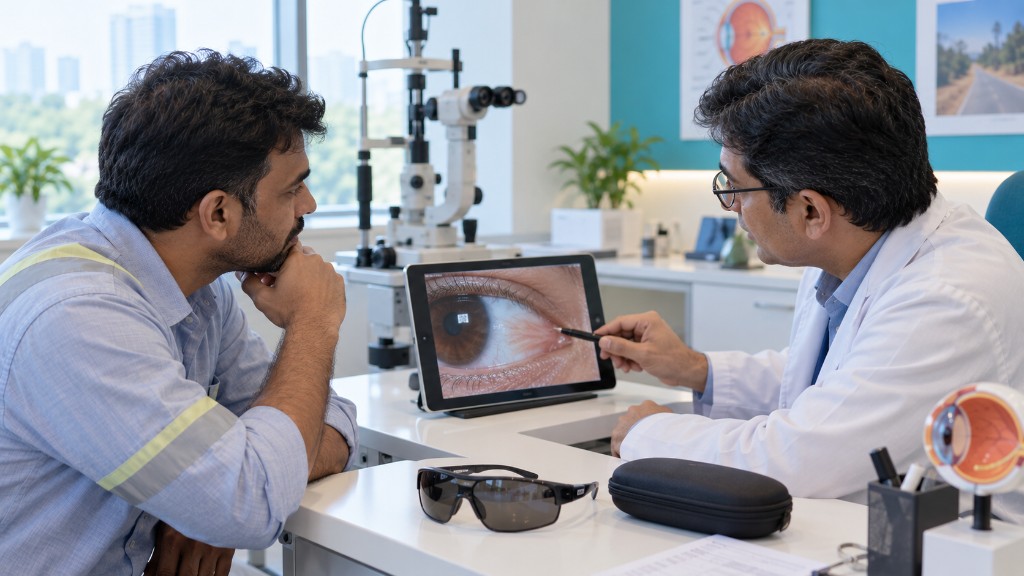
People call it “meat on the eye”. The chart name is pterygium: a fleshy, often triangular growth from the conjunctiva onto the cornea. It is a known diagnosis with decent search intent. It still does not deserve a surgery slot from a selfie.
ReliveCure measures how far the tissue has grown, then — only if excision has earned an operation — matches you to a senior surgeon at an accredited centre in Gurugram, Hyderabad, Pune or Mumbai. Recurrence is part of the consent, not a footnote we hide.
What a pterygium is (and is not)
It is not a cancer in the usual patient story, and it is not a cataract. It is surface tissue responding over years to ultraviolet light, wind and dust — abundant on two-wheeler commutes in Pune, Hyderabad, Mumbai and Gurugram alike.
A pinguecula is a cousin that stays on the white and does not grow onto the cornea. Mixing the two is how people get oversold.
A 38-year-old site engineer we saw had a nasal patch that looked dramatic in photographs and sat well clear of the pupil. Lubricants and UV protection were the plan. His colleague’s growth had crossed toward the visual axis and was changing astigmatism. Same word, different fork.
When surgery is a reasonable conversation
Excision is worth discussing when:
- The growth is heading toward the centre
- Inflammation will not settle
- Contact lenses will not sit
- Induced astigmatism is shifting the glasses number
- Appearance is a real reason — say it plainly — after the map, not instead of it
Pterygium surgery is not LASIK. It does not aim to free you from glasses. If laser vision correction is also on your mind, that is a later, separate suitability question after the surface is quiet. See the laser eye treatment overview only after the pterygium plan is clear.
If the white of the eye is not the issue and the lens is cloudy, that is cataract, not pterygium.
What excision with a graft actually means
The growth is removed. Many surgeons place a thin graft of your own conjunctiva (or an amniotic membrane in selected cases) over the bare area to lower the chance it returns. Stitches or glue, steroid drops, and a red eye for days to weeks are normal parts of recovery — not complications by themselves.
| Decision | What it is trying to do |
|---|---|
| Watch + UV + lubricants | Keep a small, quiet growth from becoming an operation |
| Excision + conjunctival graft | Remove tissue and lower recurrence versus bare sclera |
| Amniotic membrane (selected) | Cover when your own conjunctiva is a poor fit |
Recurrence is the honest small print. Sun, incomplete removal, and a fiery surface all raise it. Anyone who says “it never comes back” is not describing this disease. ReliveCure will not.
What the visit should include
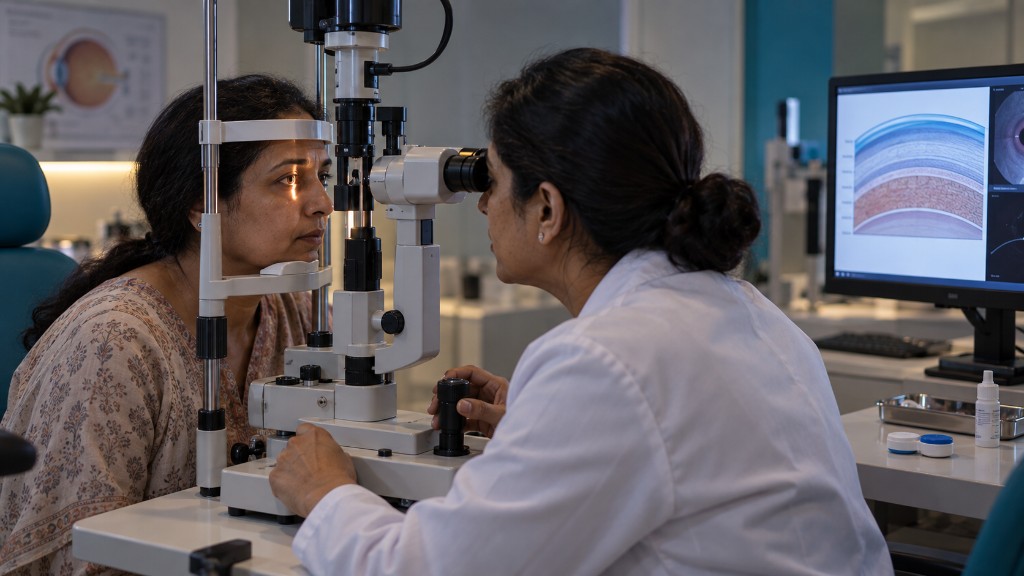
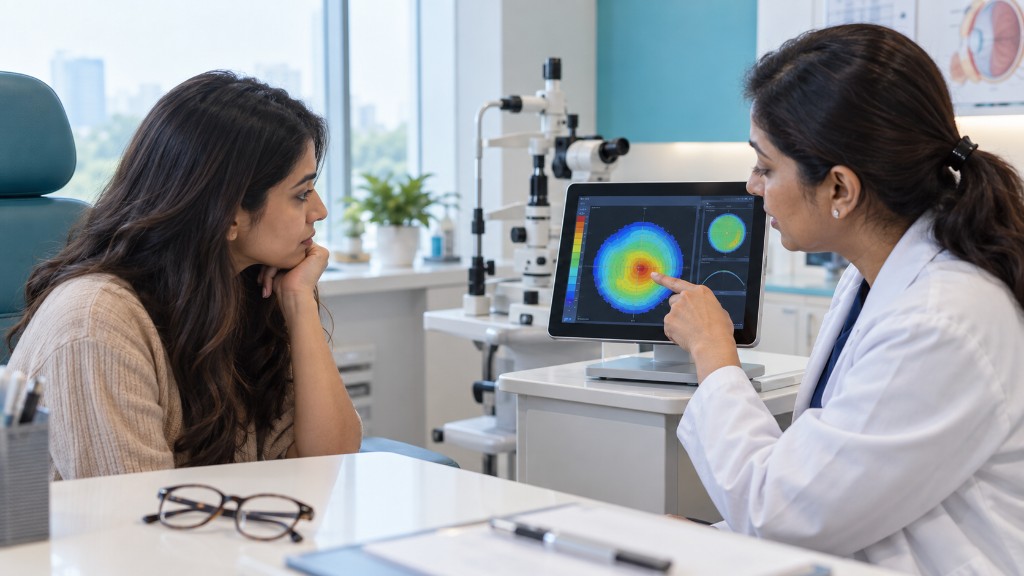
A slit-lamp measure of how far the head has grown onto the cornea. Refraction, because a changing cylinder is data. A photograph you can compare in six months if we watch.
You should leave knowing: watch vs excise; graft vs not; and that redness after surgery is expected.
Dhoop se bachiye — wraparound UV protection after, and before, is part of the medical plan, not a fashion note.
If the cornea is scarred from something else, or the shape is a cone, those are transplant and keratoconus pages — do not mash them into a pterygium quote.
How ReliveCure sits here
Evaluation first, booked by ReliveCure in Gurugram, Hyderabad, Pune, Mumbai, or another metro we already serve. When excision is the fit, a senior surgeon at an accredited centre, with recurrence and drop schedule written down. No guaranteed cosmetic result. No same-day pressure because a photograph was shared in a family group. Call +91 96500 23161.
Myths
“Drops will melt it away.” They can calm redness. They do not reliably dissolve the tissue.
“If I can see it in the mirror, I need surgery.” Many small, quiet pterygia are watched.
“It never comes back after a graft.” Grafts lower risk. They do not erase it.