Retina · 22 Sept 2026 · 11 min read
Uveitis Treatment in India: Quiet the Inflammation, Treat the Cause
Uveitis is not pink eye. How uveitis treatment works in India — drops, injections, TB workup — and when to come in. ReliveCure evaluates first.
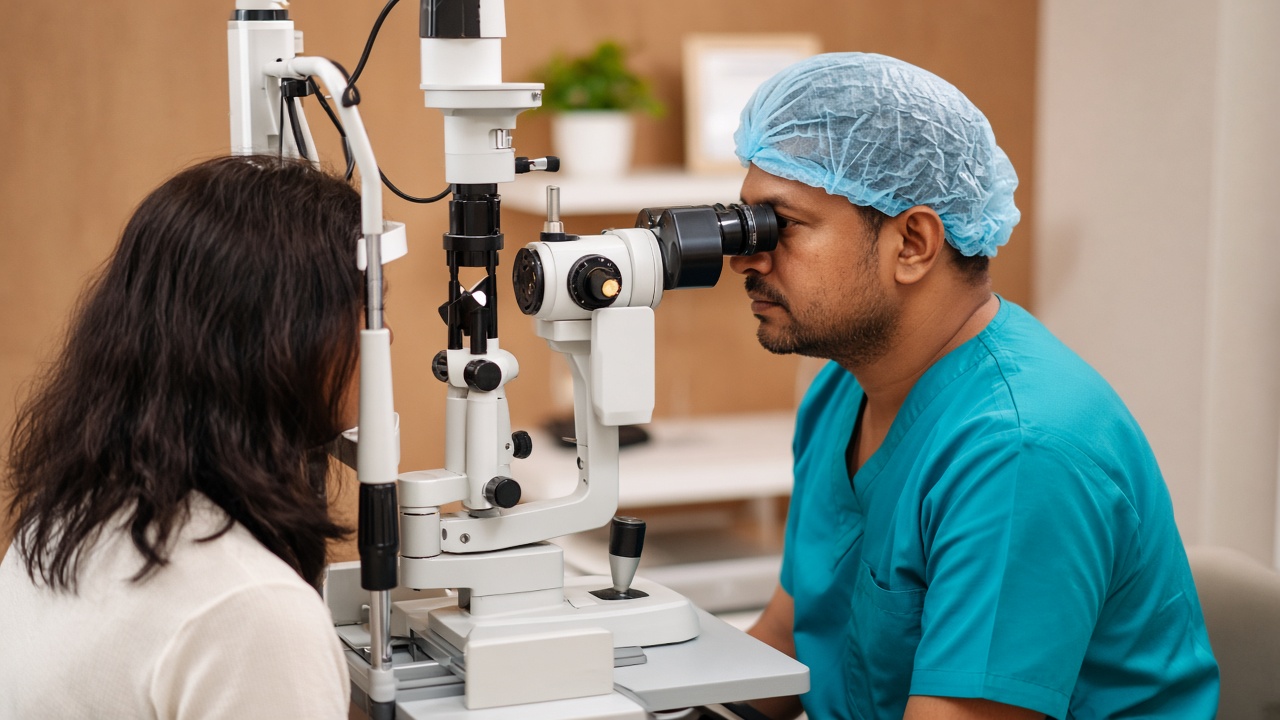
Uveitis treatment starts with one honest sentence: this is inflammation inside the eye, not a surface infection you wait out with over-the-counter drops. If the eye is red, painful, light-sensitive, or vision is falling, the next step is a dilated exam and a cause workup — in India that cause is often TB or an autoimmune disease — then a plan to quiet the inflammation before it scars the eye.
You come to ReliveCure in Gurugram, Hyderabad, Pune, Mumbai, or another metro we already serve. We grade the inflammation, look for the cause, and take you through drops, injections or admission when that is the honest next step. We do not call this conjunctivitis from a blog.
What uveitis actually is
The uveal tract is the middle layer of the eye: iris in front, ciliary body, choroid at the back. When it inflames, people feel pain, redness, glare, floaters, or a drop in vision. Anterior uveitis (iritis) is the common front-of-eye form. Intermediate and posterior uveitis sit deeper and are easier to miss until the macula swells or the retina is involved.
Causes are not one list. Autoimmune disease (ankylosing spondylitis, rheumatoid arthritis, others). Infection (TB, toxoplasmosis, herpes). Trauma. In India a large share of cases are TB-related, which changes both the medicines and how long you stay on them. Relapsing is common. One quiet month is not a cure.
Complications each need their own plan: secondary glaucoma, cataract, macular oedema, even retinal detachment. Treating “the redness” and ignoring the pressure or the macula is how sight is lost.
Why it is so often called conjunctivitis first
A red eye in a metro clinic is usually treated as surface infection. Conjunctivitis typically itches or discharges. Uveitis typically hurts in the light, the pupil can look small, and vision is not fine. If drops for “pink eye” have not settled pain and photophobia in a couple of days, stop guessing. Pehle jaanch, phir dawai. Check first, then medicine.
What a uveitis evaluation should include
Expect dilation. The drop blurs near work for a few hours.
A complete visit should cover:
- Visual acuity in both eyes
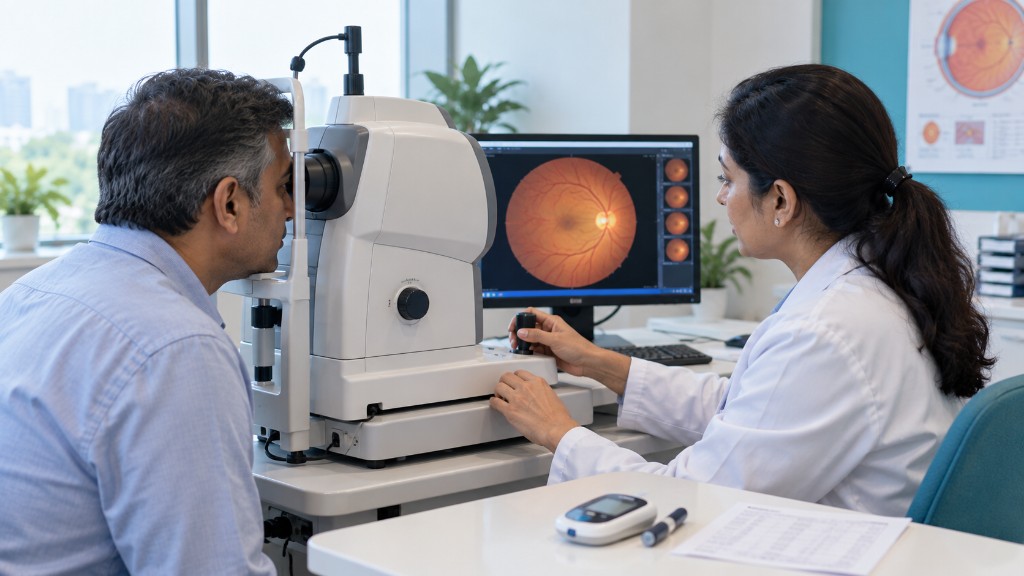
- Slit-lamp grading of the inflammation (cells, flare, keratic precipitates)
- Pressure — steroid drops can raise it, and uveitis itself can
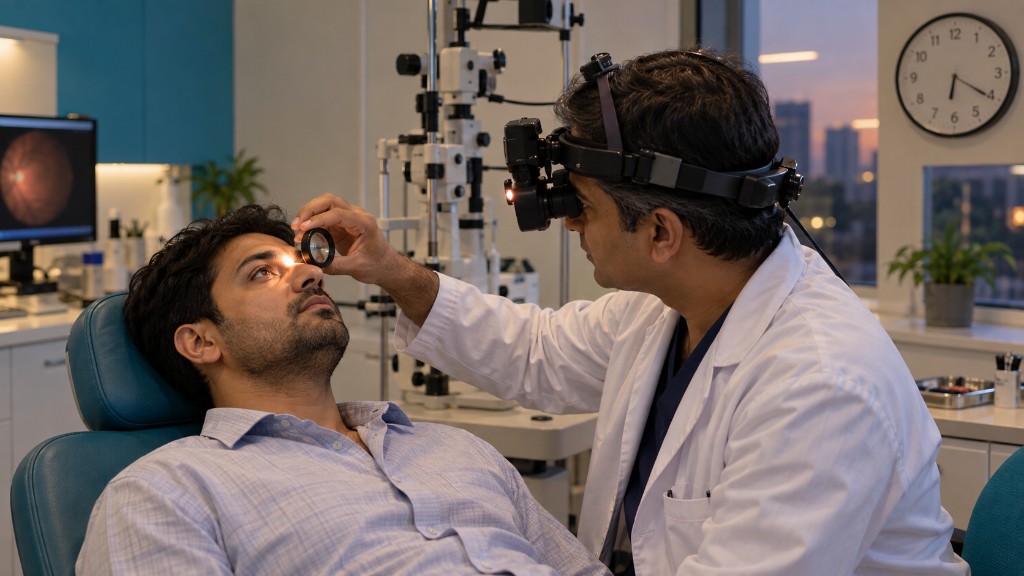
- Dilated retina exam, even if the pain feels “in front”
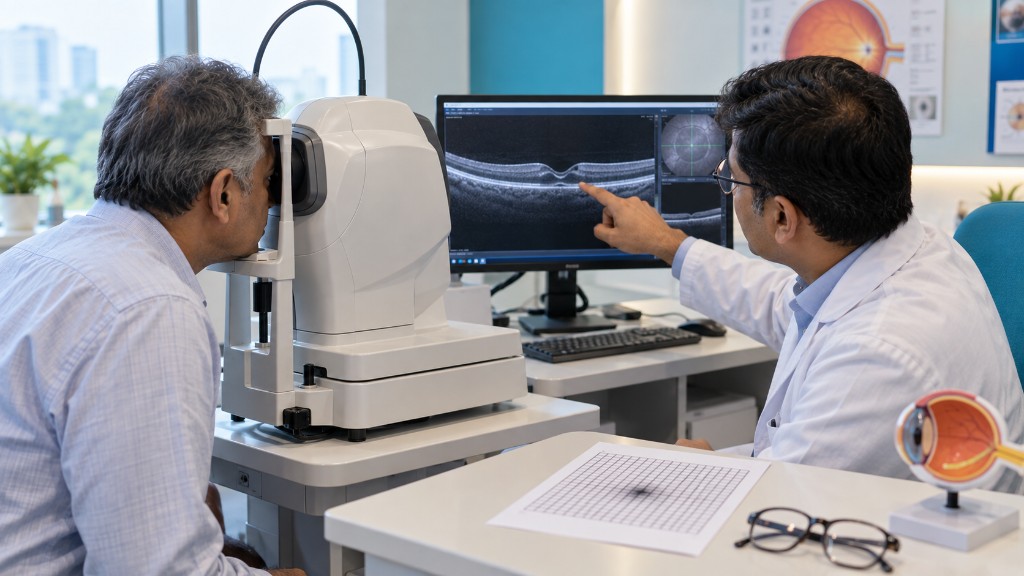
- OCT if the macula may be swollen
- A cause workup when the pattern says so: blood tests, chest imaging, TB tests as indicated — not a random panel for every red eye
You should leave knowing the type (anterior / intermediate / posterior / pan), whether we have a likely cause, and whether the next step is drops, an injection, or admission. Written, not only spoken.
How uveitis treatment actually runs
Drops (steroid, cycloplegic) are the usual first line for anterior uveitis. They are not optional extras. Stopping them the day the pain eases is how the flare comes back.
Treat the cause. If this is TB-related, anti-tubercular treatment belongs in the plan. If it is HLA-B27 or another autoimmune pattern, the joint or gut doctor is part of the same file. Quieting the eye while the cause runs is how people bounce between ERs.
Injections and implants. When the inflammation or the macular swelling sits further back, an intravitreal steroid injection or an implant such as Ozurdex is often the tool. In Indian private hospitals this is usually day care, not an overnight stay. India private-market bands (not ReliveCure quotes) sit around ₹10,000–35,000 for a steroid injection and ₹35,000–70,000 for an Ozurdex implant; an implant may hit a policy sub-limit. Exact figures after evaluation.
Admission is for severe, sight-threatening inflammation — intravenous steroids, close pressure checks, infection ruled in or out. India private-market admission bands in the source sit around ₹30,000–90,000. That is a pattern, not a promise.
Home immunosuppressants (monthly bands around ₹2,000–12,000) are often what keeps a relapsing case quiet. Most health policies treat them as OPD pharmacy, so they are usually self-pay. We still write them when the eye needs them. We do not skip them because the TPA will not reimburse drops.
This page is the treatment fork. Cover, day care and the notes that survive a claim live in our eye surgery insurance hub. We will break uveitis insurance out as its own guide.
If diabetes is also in the file
Uveitis is not diabetic retinopathy, but both can sit in the same patient. Swelling of the macula, injections, and a dilated exam overlap. If sugar is the story you already know, read diabetic retinopathy treatment as well — do not mix the two into one “injection package.”
Cataract that follows chronic inflammation is a later, separate decision. Our cataract surgery guide is the lens page; it is not uveitis treatment.
Where ReliveCure fits
You come to ReliveCure in Gurugram, Hyderabad, Pune or Mumbai. We do the evaluation, grade the inflammation, and take you through treatment when that is honest. We check your policy at that visit. We do not guess cover, and we do not start steroid drops without looking inside the eye.
Exact cost and exact cover come after the evaluation, not before. Book a free eye evaluation — call +91 96500 23161.